Wadden Sea Fish Targets
Many marine and estuarine fish species depend on the Wadden Sea during key stages of their cycle - using it as a nursery, feeding ground, spawning area, or migration corridor between marine and freshwater habitats. However, populations of several species have declined in the in recent decades, for reasons that are not yet fully understood.
Recognizing the ecological importance of fish within the Wadden Sea ecosystem, the authors of the 2009 Wadden Sea Quality Status Report (QSR) proposed a set of conservation objectives for the fish in the Wadden Sea. These were adopted in 2010 as part of the revised Wadden Sea Plan, known as the Trilateral Fish Targets.
The QSR provides regular assessments of progress towards these targets. An overarching ambition for fish conservation in the Wadden Sea, defined by authors of the 2017 QSR thematic report on fish, states that:
There should be no human-induced bottlenecks in the Wadden Sea for fish populations or their ecosystem functions (Tulp et al, 2017)
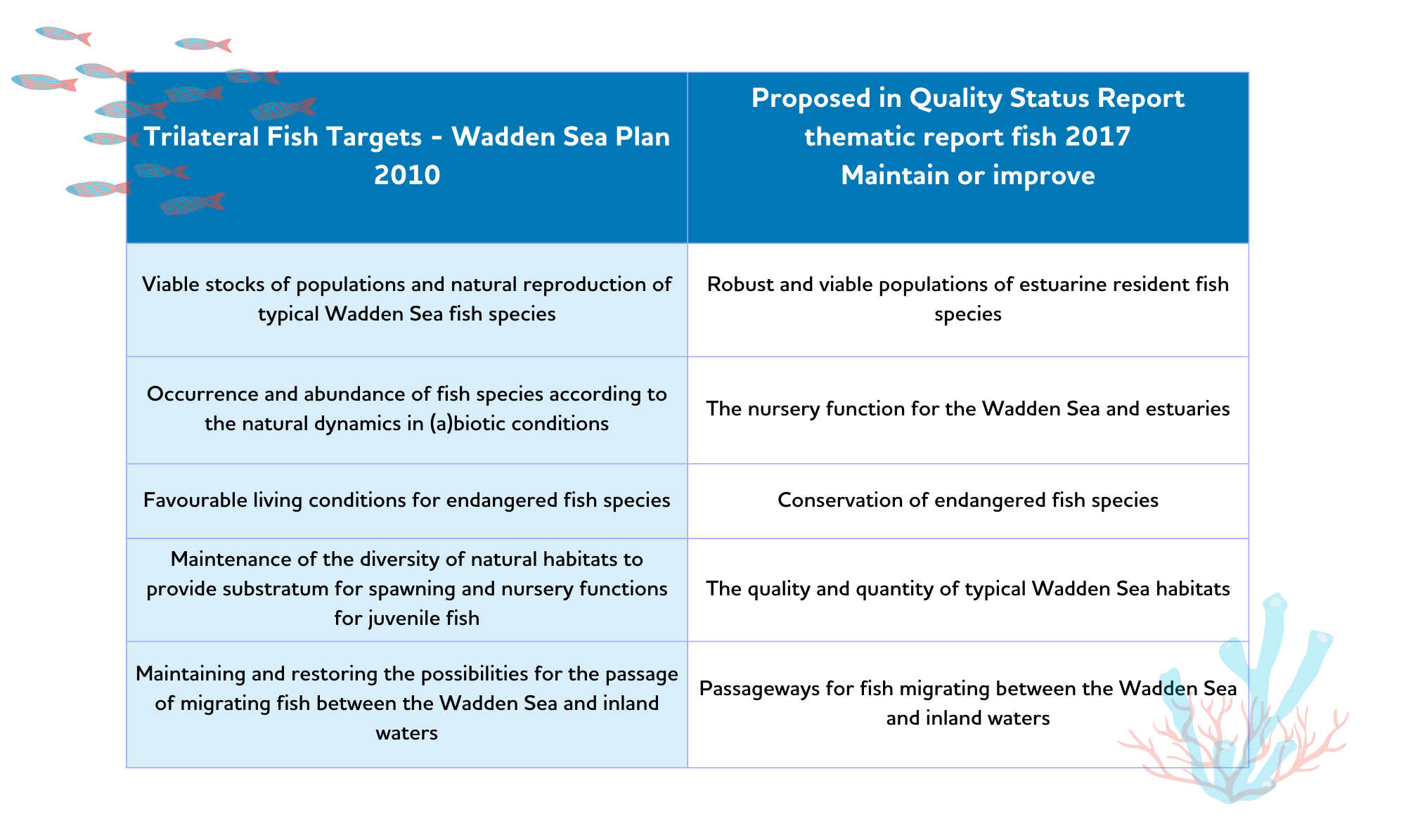
Trilateral fish targets as in the Wadden Sea Plan 2010 (left) and proposed revision by authors of the trilateral Quality Status Report thematic report fish 2017 (right) in reference to the overall target.